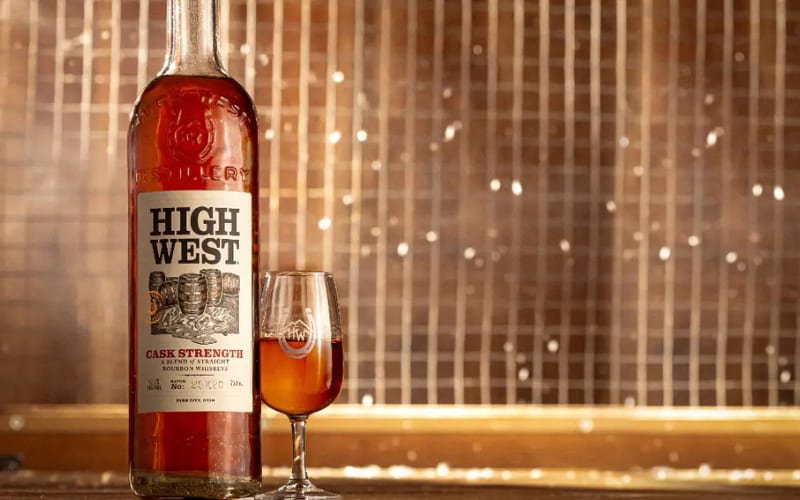
High West Distillery out of Park City, Utah is putting something new on shelves that's been getting attention from bourbon drinkers across the country. The distillery just announced Cask Strength, a limited-edition bourbon that blends five different straight bourbons together, some of which have been aging for two decades.
Starting January 12, this new release hit stores nationwide in limited quantities, though anyone who wants to guarantee a bottle can order directly from the distillery's website. The price tag sits at $69.99, which puts it in the premium category but not quite in the collector's realm.
What makes this release particularly interesting is the timing. It comes right after Isaac Winter, the distilling director at High West, earned his Master Distiller Certification. That's not some weekend course—it's a serious credential in the American whiskey world that requires years of experience and a deep understanding of the craft. The certification process is known throughout the industry as one of the more rigorous achievements a distiller can earn.
The Recipe Behind the Bottle
Winter didn't hold back when putting this blend together. The bourbon combines whiskeys aged anywhere from six to 20 years, sourced from three different states: Kentucky, Indiana, and Tennessee. That's a lot of moving parts to balance, but High West has been doing this kind of thing since they opened their doors in 2006.
The exact breakdown gets pretty detailed. Three of the five bourbons come from Kentucky. Two of those Kentucky bourbons use the same mash bill—60 percent corn and 40 percent malted barley. The third Kentucky bourbon runs 78 percent corn, 10 percent rye, and 12 percent malted barley. From Indiana, there's a bourbon made with 68 percent corn, 21 percent rye, and 4 percent malted barley. Rounding things out is a Tennessee bourbon at 84 percent corn, 8 percent rye, and 8 percent malted barley.
After blending these five bourbons together, the whiskey gets finished in new, charred American white oak barrels. Then it's bottled without chill filtering at 58.5 percent alcohol by volume, which comes out to 117 proof. That's definitely on the higher end for bourbon, though serious whiskey drinkers often prefer their spirits at full strength rather than watered down.
A Distiller's Approach
Winter explained his thinking behind the blend. "This was a really fun blend to put together. Building on our high-rye blending philosophy, this Cask Strength expression uses our Bourye blending approach to precisely balance rye-driven spice with malted barley richness, resulting in layered complexity and a bold, lasting presence that keeps you coming back."
That mention of Bourye is significant for anyone familiar with High West. The distillery has become known for blending bourbon and rye whiskeys together in ways that most traditional distillers wouldn't attempt. It's part of what's made them stand out in a crowded market over the past eighteen years.
The high-rye blending philosophy Winter mentions is visible in the mash bill breakdown. While most bourbons focus primarily on corn sweetness, this blend pulls in significant amounts of rye grain, which typically adds spiciness and complexity. The malted barley, meanwhile, brings a different kind of richness—smoother and more rounded than either corn or rye on their own.
What's in the Glass
According to High West's tasting notes, the bourbon opens up with some unexpected aromas. The nose carries butter-poached green apples, cornbread drizzled with honey, and allspice. Those aren't your typical bourbon descriptors, which usually lean heavily into vanilla and caramel territory.
When you actually taste it, the palate delivers sweet plantains with cinnamon, peach crumble, homemade toffee, and seasoned oak. That's a lot happening at once, which makes sense given how many different whiskeys are in the blend. Each of those five bourbons is bringing its own character to the mix.
The finish—what lingers after you swallow—reportedly shows notes of kumquat, white chocolate, and what the distillery calls "velvety spice." At 117 proof, there's definitely going to be some heat, but the description suggests it's more refined than harsh.
The High West Story
For those not familiar with the distillery, High West has carved out an interesting position in American whiskey. Park City isn't exactly Kentucky or Tennessee, the traditional homes of bourbon and whiskey production. But the Utah location hasn't stopped them from building a solid reputation.
Since opening in 2006, they've focused on blending rather than just producing single-source whiskeys. Their core lineup includes well-known bottles like Rendezvous Rye and Campfire Whiskey, both of which use the blending approach that's become their signature style.
Campfire, in particular, pushes the boundaries—it combines bourbon, rye, and peated Scotch whisky into one bottle. That kind of experimentation isn't common in the whiskey world, where tradition often dictates staying in well-defined lanes. But it's exactly that willingness to try something different that's helped High West stand out on crowded liquor store shelves.
Limited Availability
The "limited quantities" language in the announcement is worth paying attention to. High West isn't saying exactly how many bottles are available, but limited-edition bourbon releases have a tendency to disappear quickly these days. The bourbon market has gotten competitive over the past decade, with collectors and enthusiasts snapping up interesting releases as soon as they hit stores.
At $69.99, this sits in an interesting price range. It's more expensive than your everyday bourbon, but it's not reaching into the three-figure territory where some allocated bottles land. For a blend that includes 20-year-old whiskey and carries a Master Distiller's first major release after certification, the pricing seems calculated to be accessible while still signaling quality.
The nationwide distribution is significant too. Some craft distilleries struggle to get their products beyond their home state or region. High West clearly has the distribution network in place to reach bourbon drinkers from coast to coast, though whether your local liquor store actually gets a bottle is another question entirely.
What This Means for High West
Winter's Master Distiller Certification and this release seem timed together for good reason. In the whiskey industry, earning that credential is a big deal—it signals that you've put in the years and learned the craft at a deep level. Following it up immediately with a limited-edition release lets Winter put his stamp on the distillery's lineup in a concrete way.
The fact that High West is calling out the certification in their announcement also shows they understand its value in the market. Bourbon drinkers pay attention to who's behind the whiskey, and having a newly certified Master Distiller at the helm is the kind of detail that builds confidence in what's in the bottle.
For a distillery that's built its reputation on blending rather than single-source production, having someone with Master Distiller credentials overseeing the process adds another layer of legitimacy. Blending gets less attention than distilling in whiskey conversations, but it's arguably just as important—maybe more so when you're trying to balance five different bourbons with different ages and mash bills into something cohesive.
The Bigger Picture
This release comes at an interesting time for American bourbon. The category has exploded in popularity over the past fifteen years, leading to a market where allocated bottles and limited releases generate serious buzz. What was once a fairly straightforward category—Kentucky bourbon, Tennessee whiskey, a handful of ryes—has expanded into something much more diverse.
Craft distilleries like High West have played a role in that expansion. By approaching whiskey-making differently than the big traditional producers, they've opened up new possibilities for what American whiskey can be. Blending whiskeys from multiple distilleries, experimenting with unusual finishes, combining categories that traditionally stayed separate—these approaches have given bourbon drinkers more options than ever before.
Whether Cask Strength becomes one of those releases people hunt for or just another solid addition to the High West lineup remains to be seen. But the combination of a Master Distiller's certification, 20-year-old bourbon in the blend, and the distillery's established reputation for interesting blends suggests this isn't just another whiskey hitting shelves.
For bourbon drinkers looking to try something beyond the usual suspects, this seems like the kind of release worth seeking out before it disappears. And at $69.99, it's priced at a point where trying it won't require taking out a second mortgage, even if tracking down a bottle might require calling around to a few stores.


