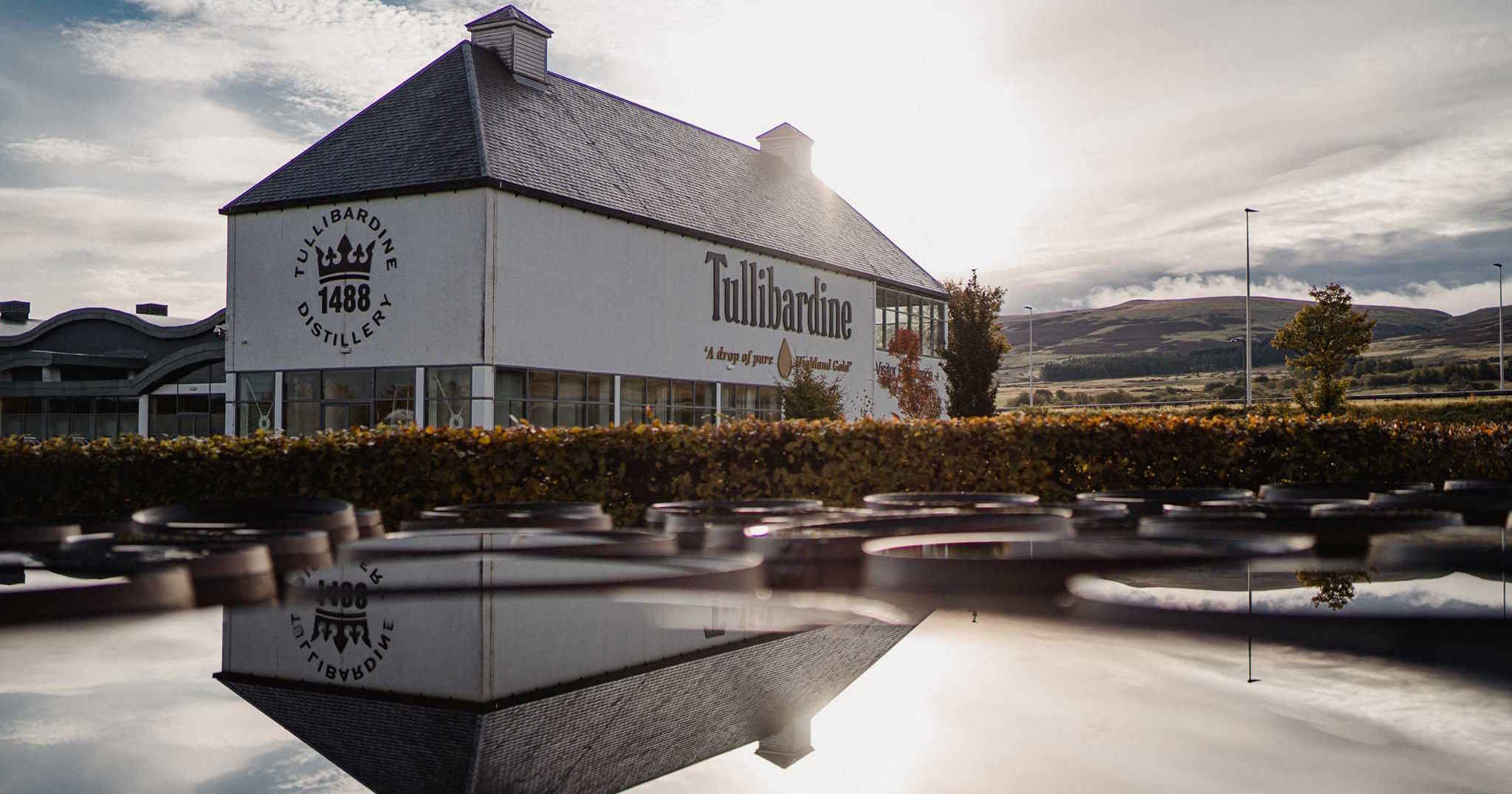
There's a distillery sitting quietly in the Scottish Highlands that most American whisky drinkers have never heard of. That's starting to change — and the people responsible for turning heads happen to all be women.
Tullibardine Distillery, tucked away in Blackford, Perthshire at what locals call the gateway to the Scottish Highlands, has been making single malt Scotch since the late 1940s. It's one of a dying breed in Scotland — a place where the whisky is distilled, matured, and bottled all on the same site. That kind of control over the process is rare. Most distilleries have given that up somewhere along the way. Tullibardine hasn't.
Since 2011, the distillery has been owned by Terroirs Distillers, an independent family-owned company that has kept the artisan spirit of the place very much alive. The whisky is handcrafted. The team is small. And right now, three women are at the center of everything — the distilling, the blending, and the marketing.
In recognition of Women's History Month, Tullibardine is putting a spotlight on exactly that.
The Woman Running the Stills
Minnie Parmiter came on as Distillery Manager in 2025, and her resume reads like a tour of the British Isles' most interesting whisky and spirits operations. She worked at Echlinville Distillery in Northern Ireland, spent time at Diageo's large-scale Roseisle Distillery in Scotland, and put in years at BrewDog before eventually co-founding her own operation — Copper Lion Distillery — in 2020.
Her background isn't the typical distillery career path. Minnie started in biology and academic research. That scientific foundation gives her a different kind of eye for the production process — methodical, precise, and always asking why something works the way it does. For a distillery like Tullibardine, where quality control happens under one roof from grain to glass, that mindset is a strong fit.
She's now carrying what the distillery describes as the baton — a phrase that carries real weight in a place with more than seven decades of whisky-making history behind it.
The Science Behind the Flavor
Every bottle of Tullibardine that makes it to the shelf has passed through the hands of Stacy Longworth, the distillery's Blending Manager. Her job sits at the intersection of science and craft — and she came prepared for exactly that.
Stacy holds a degree in Food Bioscience and spent several years at the Scotch Whisky Research Institute, starting as a placement and working her way up to Analytical Research Scientist. That's not a casual background. The Institute is where serious, rigorous whisky science gets done, and spending years there means developing a palate and a technical understanding that most blenders simply don't have.
She moved into her role at Tullibardine in 2022, taking on blending and inventory responsibilities. On top of all of that, she's has completed a Diploma in Distilling. She is, in short, someone who has never stopped studying the thing she does for a living.
When Stacy signs off on a cask or a blend, there's both the rigor of a scientist and the instinct of someone who has spent years with her nose in a glass behind the decision.
Getting the Word Out
Ros Frame has been with Tullibardine since 2021, handling all the marketing for the distillery and for Terroirs Distillers' broader whisk(e)y portfolio. That's a job that covers everything from advertising campaigns to developing new products.
She came to Tullibardine with solid experience already in place. Before joining, she worked across a wide variety of spirits brands — Chivas Regal, That Boutique-y Whisky Company, Bathtub Gin, and Drinks by the Dram among them. She also judges at whisky industry awards, which means she's not just talking about good whisky — she's actively evaluating it alongside some of the most experienced people in the business.
Her work is the reason more American drinkers are starting to encounter Tullibardine at all. The distillery has been building out its U.S. presence deliberately, putting together a lineup of expressions that reflect the distillery's character and give new drinkers a clear path into the range.
What's in the Bottle
For American drinkers getting introduced to Tullibardine, the lineup is worth knowing. The distillery keeps things honest — there's no smoke and mirrors here, just well-made whisky with a clear identity.
The Artisan expression is the starting point. It's the flagship single malt for the U.S. market, matured exclusively in ex-bourbon barrels. It's meant to be a clean, accurate representation of what Tullibardine tastes like at its core — the kind of whisky that gives you a reliable read on a distillery's character before you start exploring the more aged or finished expressions.
The 12 Year Old is matured exclusively in first-fill bourbon casks and delivers something creamy and approachable — soft citrus, toffee apples, and freshly baked biscuits. It's the kind of whisky that doesn't demand anything from the person drinking it. It just tastes good.
The 12 Year Old Double Wood takes that same base and runs it through a second maturation in first-fill sherry casks. What comes out is richer and smoother, with vanilla, honey, and golden raisins coming through clearly. The sherry influence doesn't overwhelm — it deepens.
At 15 years old, the whisky takes on something more nostalgic. Notes of freshly baked scones, strawberry jam, and clotted cream show up alongside delicate spices and a finish that goes slightly nutty. It's a Highland summer afternoon in a glass, if that's the kind of poetic description you're willing to go along with.
The 18 Year Old is where Tullibardine gets serious. Matured in both first-fill bourbon and sherry casks, it brings warm spices and dried fruit together with caramel and vanilla. The distillery positions this one for the drinker who wants complexity — someone who's been around long enough to appreciate what time and good wood can do to a spirit. It's not a beginner's whisky, but it's not trying to be.
A Place Worth Paying Attention To
Tullibardine is not a household name in the United States — not yet. But it's the kind of distillery that tends to earn loyal drinkers once people actually try the whisky. It has the history. It has the process. It has the people. And right now, three accomplished women are running the show in a way that suggests the next chapter of this distillery's story is going to be worth following.
For anyone who takes their Scotch seriously, that's reason enough to seek out a bottle.


