7 Bourbons That Don't Deserve Their Cult Following
The Bourbon Hype Machine Is Running at Full Speed

Scarcity, social media, and slick packaging have turned certain bourbon bottles into cultural totems — objects of desire that bear little relationship to what's actually in the glass. When a bottle routinely sells for two or three times its suggested retail price on the secondary market, it stops being about the whiskey and starts being about status. The result is a culture where bourbon fans queue up for lotteries, pay inflated markups, and then feel obligated to love what they've worked so hard to find. Not every bottle that commands a cult following deserves one, and some of the most famous names in bourbon are the clearest proof of that. The bottles below all have genuine fan bases and real histories, but the gap between their reputation and their liquid is worth an honest conversation.
Blanton's Single Barrel: Paying for the Horse, Not the Pour

Blanton's genuinely earned its place in history as the first commercially marketed single-barrel bourbon, introduced in 1984 by Elmer T. Lee at Buffalo Trace. But history doesn't make great whiskey, and in 2025 the bottle's iconic horse-and-jockey stopper has become a bigger draw than the liquid inside. With an MSRP of around $65–75, Blanton's is a reasonable pour at retail — but secondary market prices routinely hit $140–$150, and at that price point it simply doesn't hold up against bourbons actually priced in that range. Critics frequently note that the 93-proof spirit, built on Buffalo Trace's high-rye Mash Bill #2, offers a serviceable profile of vanilla, cereal sweetness, and light fruit that falls short of the complexity that $150 should buy. The collectible bottle design has undoubtedly made Blanton's one of the most recognizable bourbons on shelves, but that recognition is doing far more work than the whiskey itself. Buy it now!
Pappy Van Winkle: Mythology Priced by the Bottle
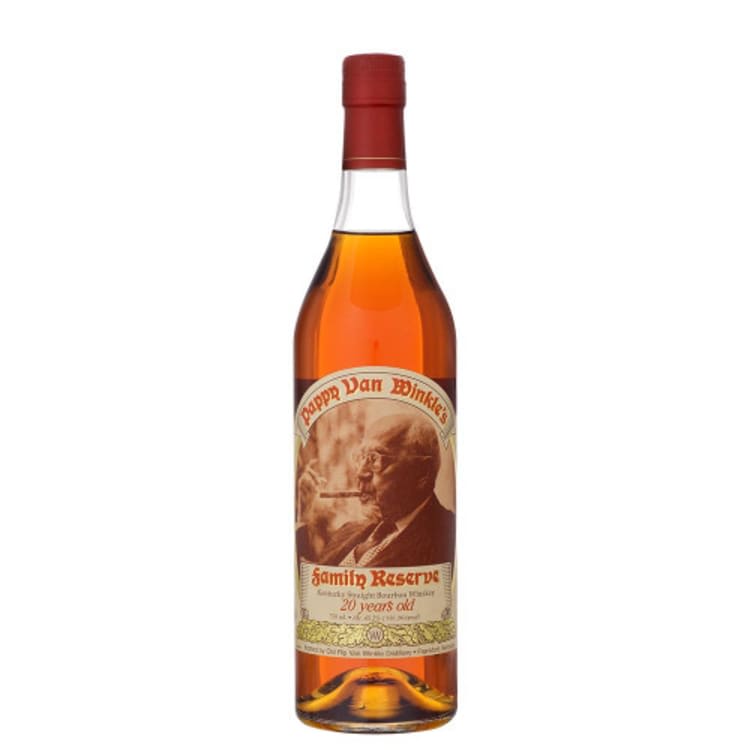
Pappy Van Winkle may be the most famous bourbon in America, and its mystique was turbocharged in 1996 when the 20-year expression received 99 points from the Beverage Testing Institute — sending demand into a spiral it has never recovered from. The Van Winkle line is produced at Buffalo Trace using a wheated mash bill, and while every expression in the range is undeniably pleasant, multiple bartenders and reviewers have described the overall experience as good but nowhere near worth the money. Secondary prices on the 15-year regularly start at $850 at auction, while critics note the flavor profile doesn't stand meaningfully apart from far cheaper wheated bourbons on the market. The honest verdict from most seasoned drinkers who finally crack a bottle is closer to "very good" than "transcendent" — a polite way of saying that the mythology has long outpaced the whiskey. When a bottle becomes more valuable as a status symbol than a drinking experience, that's a sign the cult has eclipsed the craft. Buy it now!
Angel's Envy: Finishing School for Average Juice

Angel's Envy built its reputation on a genuinely clever idea: finishing a roughly six-year-old bourbon in repurposed port wine casks to add a layer of dark fruit sweetness to an otherwise standard profile. The mash bill — 72% corn, 18% rye, and 10% malted barley — is solid, and the finishing technique does deliver notes of sweet port, vanilla, and caramel. But at an 86-proof bottling strength, critics argue that the whiskey is too watered down to develop real depth, and the port finish comes across as surface-level rather than transformative. Breaking Bourbon described the experience as "average at best... when compared to other finished bourbons on the marketplace," and one prominent whiskey reviewer noted that the dark fruit from the port finish was "quite tame" and the finish felt rushed. At around $55 MSRP for the flagship expression, Angel's Envy is priced at a premium that invites comparison to bourbons with significantly more complexity — a comparison it consistently loses. Buy it now!
Basil Hayden's: Proof Is Everything, and 80 Is Not Enough

Basil Hayden's has built a strong following among casual bourbon drinkers by marketing itself as a sophisticated, high-rye expression from the Jim Beam portfolio — but the brand's defining flaw is impossible to overlook once you notice it. Virtually every expression in the lineup is bottled at 80 proof (40% ABV), and that low bottling strength strips out the body, heat, and complexity that bourbon drinkers at this price point are paying for. One Houston bar owner, speaking to VinePair, called it "the most overrated bourbon on the market, period," adding that "having eight available expressions all at 80 proof is a travesty to bourbon and whiskey in general." At around $46 MSRP, Basil Hayden's is not egregiously overpriced by dollar value, but the positioning as a premium sipping bourbon for discerning palates doesn't survive contact with a glass. The high-rye mash bill does deliver peppery notes of caramel and black pepper, but without the proof to carry those flavors to any real conclusion. Buy it now!
W.L. Weller Special Reserve: Pappy Envy in a Cheaper Bottle

W.L. Weller Special Reserve was once the kind of affordable, honest wheated bourbon that any well-stocked liquor store carried for around $25 — a genuinely good value that flew under the radar for decades. That all changed when the internet decided it was a "poor man's Pappy Van Winkle," given that both share Buffalo Trace's wheated mash bill and the same distillery floor. The rumor lit a fire that has never gone out: the Weller lineup is now heavily allocated, routinely marked up well above MSRP, and hunted with the same energy once reserved for the Van Winkle bottles themselves. Bartenders who manage to stock it at retail will tell you it's enjoyable at its intended price — but paying significantly above that for a wheated bourbon with limited age statement and a pleasant but uncomplicated profile of caramel, wheat, and vanilla is difficult to justify. The cult following is entirely borrowed from Pappy's coattails, and without that association, Weller would still be quietly sitting on the shelf where it belongs. Buy it now!
Eagle Rare 10 Year: A Prestige Label Doing a Mid-Shelf Job

Eagle Rare 10 Year carries serious credentials — a 10-year age statement, single-barrel production, Buffalo Trace provenance, and a shelf of tasting competition medals including Double Gold at the San Francisco World Spirits Competition. At its MSRP of around $38, it genuinely delivers value. The problem is that Eagle Rare's demand has made it as hard to find at MSRP as bottles costing three times as much, with secondary market prices hovering around $100. At that elevated price, the 90-proof bourbon is expected to compete with a very different tier of whiskey, and multiple reviewers have found it wanting — citing a thin mouthfeel, an underwhelming short finish described as medicinal and oak-dominated, and a surprising lack of complexity for a decade-aged spirit. The bourbon exhibits "a surprising youthfulness and lack of complexity that belies its 10 years of aging," according to Barrel Banter's 2026 review. For what it is at MSRP, Eagle Rare is solid; for what the market charges, it is one of bourbon's most persistent disappointments. Buy it now!
Michter's 10 Year: Premium Packaging, Middling Payoff

Michter's has done an exceptional job positioning itself as a luxury American whiskey brand, and its 10 Year Single Barrel expression is the halo product that justifies that positioning — at least on paper. Released in limited quantities each year with an MSRP of around $140–$150, it is priced firmly in territory that invites comparison to the best aged bourbons in the country. Critics, however, argue that the mouthfeel lacks richness and the flavor profile lacks the depth that a decade of aging at that price should deliver, with reviewers describing it as a respectable bourbon that you are nonetheless significantly overpaying for. Michter's builds considerable brand equity through scarcity management and elegant presentation, and those factors do much of the heavy lifting where the liquid leaves off. The 10 Year is not a bad bourbon — but in a category where $140 buys genuinely extraordinary whiskey from distilleries with less marketing muscle, settling for moderate quality and a handsome bottle starts to look like a poor trade. Buy it now!
More Galleries